• Split, wraparound design with crimp-to-seal closure for true retrofit installs.
• Black EPDM compound engineered for weathering resistance (UV/ozone).
• Flexible base forms to panel profiles and varying roof pitches.
• Simple five-step install: measure, trim, wrap, crimp, seal.
Price: $32.95
Item #204-RF201BS-RD
Write a review!
Description
Aztec Washer RF201BS-RD is a universal retrofit flashing for situations where a standard slide-over boot won’t work. The split, wraparound design crimps to seal and conforms to common metal roof panel profiles and pitches. Molded from UV- and ozone-resistant black EPDM, size #2 covers mid-size conduits and pipe penetrations and installs quickly with the included stainless-steel gripper.
Key Features:
• Split, wraparound design with crimp-to-seal closure for true retrofit installs.
• Black EPDM compound engineered for weathering resistance (UV/ozone).
• Flexible base forms to panel profiles and varying roof pitches.
• Simple five-step install: measure, trim, wrap, crimp, seal.
Specifications
• Product line: Universal Retrofit Master Flash.
• Part number: RF201BS-RD.
• Size: #2.
• Material/color: EPDM, black.
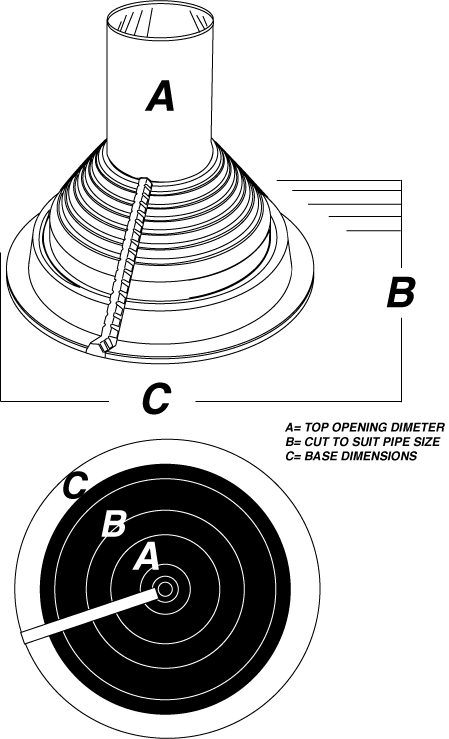
• Pipe range: 2 in to 6-1/2 in (50–165 mm).
• Base size: 10-3/4 in (273 mm).
• Initial top opening: 2 in (50 mm).
• Retrofit hardware: stainless-steel gripper included.
• Installation method: wraparound seam; crimp to seal; cut-to-fit sizing rings.
• Temperature guidance (EPDM, general): continuous to ~212 °F (100 °C); intermittent to ~275 °F (135 °C).
• Typical use: roof or sidewall penetrations where slide-over boots won’t fit.
FAQs
Q: What makes RF201BS-RD a retrofit flashing?
A: It’s a split boot that wraps around existing pipes or conduit and crimps to seal, so you don’t need to disconnect lines.
Q: What pipe sizes does size #2 cover?
A: 2 in to 6-1/2 in (50–165 mm).
Q: Do I need a clamp at the collar?
A: The seal is by compression after crimping; for the base, avoid petro-chemical-based sealants. Urethane or silicone caulking is typically recommended.
Q: When should I choose silicone instead of EPDM?
A: Use silicone where sustained temperatures exceed typical EPDM ranges; check equipment temperature specs to select the correct compound.
Reviews (0) • Write a review!
This product has no reviews yet. Write a review!